(Airborne Wings)
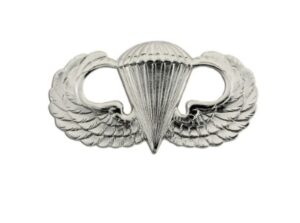
The Parachutist Badge, commonly known as Airborne Wings, is one of the most recognizable military qualification badges in the United States Armed Forces. It is awarded to service members who successfully complete military parachute training and demonstrate the skills required to conduct airborne operations safely and effectively.
For many Soldiers, earning Airborne Wings marks the beginning of service with airborne units capable of deploying by parachute into combat or other military operations. The badge symbolizes courage, discipline, and the ability to perform one of the military’s most demanding insertion methods.
History of the Parachutist Badge
The Parachutist Badge was established by the War Department on March 10, 1941, as the U.S. Army expanded its airborne capabilities before America’s entry into World War II.
The first badges were awarded to Soldiers who completed military parachute training at Fort Benning, Georgia (now part of Fort Moore). During World War II, airborne forces played major roles in campaigns across Europe and the Pacific, making the badge a lasting symbol of elite military training.
Today, Airborne Wings continue to represent one of the Army’s most respected qualification badges.
Purpose of the Badge
The Parachutist Badge recognizes successful completion of military parachute training and qualification to participate in airborne operations.
Recipients demonstrate proficiency in:
- Aircraft exit procedures
- Parachute landing techniques
- Equipment preparation
- Emergency procedures
- Airborne safety
- Tactical parachute operations
The badge signifies that the wearer has successfully completed one of the military’s most physically demanding schools.
Types of Parachutist Badges
The Army awards three primary Parachutist Badges.
Basic Parachutist Badge
The Basic Parachutist Badge is awarded after successful completion of the U.S. Army Basic Airborne Course.
Graduates complete a series of training events that include:
- Ground training
- Tower training
- Aircraft procedures
- Five qualifying parachute jumps
The Basic Badge is commonly called Airborne Wings.
Senior Parachutist Badge
The Senior Parachutist Badge recognizes additional experience beyond the Basic Badge.
Requirements generally include:
- Additional military parachute jumps
- Time on jump status
- Participation in tactical jumps
- Leadership responsibilities
- Compliance with Army qualification standards
Specific requirements are established by Army regulations.
Master Parachutist Badge
The Master Parachutist Badge is the highest level of parachutist qualification.
Recipients typically have:
- Extensive jump experience
- Numerous tactical jumps
- Significant time serving in airborne assignments
- Leadership in airborne operations
It represents years of continued service within the airborne community.
Basic Airborne Course
The Basic Airborne Course is conducted by the U.S. Army and prepares Soldiers for military parachute operations.
Training usually includes:
- Physical conditioning
- Aircraft procedures
- Exit techniques
- Parachute landing falls
- Equipment inspection
- Emergency actions
- Five successful jumps
Graduates earn the Basic Parachutist Badge upon successful completion.
Who Can Earn Airborne Wings?
Eligible personnel may include:
- Active-duty Army Soldiers
- Army National Guard Soldiers
- Army Reserve Soldiers
- Members of other military branches assigned to Army airborne training
- Certain allied military personnel attending approved courses
Candidates must meet medical, physical, and administrative requirements before attending airborne school.
Badge Design
The Parachutist Badge features an open parachute flanked by stylized wings.
The design represents the combination of aviation and airborne infantry operations.
Additional stars and wreaths distinguish the Senior and Master Parachutist Badges from the Basic Badge.
Importance of Airborne Wings
Airborne operations require precision, confidence, and teamwork.
Earning Airborne Wings demonstrates that a service member has successfully completed rigorous training and possesses the skills necessary to participate in parachute operations under military conditions.
The badge is recognized throughout the Armed Forces as a symbol of professionalism and readiness.
Common Misunderstandings
Many people assume Airborne Wings indicate combat service.
In reality, the badge recognizes successful completion of military parachute training—not participation in combat.
Similarly, not every Soldier assigned to an airborne unit automatically earns the badge. Qualification requires completion of the Basic Airborne Course and all applicable standards.
Frequently Asked Questions
What are Airborne Wings?
Airborne Wings is the informal name for the U.S. Army Parachutist Badge awarded after completing military parachute training.
How many jumps are required to earn the Basic Parachutist Badge?
Candidates must successfully complete the required qualifying parachute jumps established by the Basic Airborne Course.
What is the highest Parachutist Badge?
The Master Parachutist Badge is the highest level of parachutist qualification in the U.S. Army.
Can members of other military branches earn Airborne Wings?
Yes. Personnel from other U.S. military branches and certain allied nations may attend Army airborne training if authorized.
Conclusion
The Parachutist Badge, or Airborne Wings, is one of the U.S. military’s most respected qualification badges. From the Basic Parachutist Badge earned after Airborne School to the prestigious Master Parachutist Badge recognizing years of experience, these wings symbolize courage, discipline, and professional excellence. Whether serving in airborne infantry, special operations, or other parachute-qualified assignments, recipients wear the badge as a proud reminder of their commitment to military readiness.