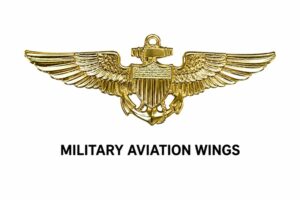
Military Aviation Wings are qualification insignia awarded to members of the U.S. Armed Forces who complete specialized aviation training or serve in designated flight-related positions. These badges recognize pilots, aircrew members, flight surgeons, aerospace professionals, and other personnel whose duties directly support military aviation operations.
Among the most recognizable military insignia, aviation wings symbolize extensive training, technical expertise, and a commitment to safe and effective flight operations. While each military branch has its own aviation badges and qualification standards, all represent professional achievement in one of the military’s most demanding career fields.
What Are Military Aviation Wings?
Military Aviation Wings are qualification badges worn on military uniforms to identify personnel who have earned aviation-related credentials.
Depending on the military branch and occupational specialty, aviation wings may recognize:
- Military pilots
- Naval aviators
- Combat systems officers
- Flight officers
- Aircrew members
- Flight surgeons
- Aerospace medical personnel
- Flight engineers
- Aviation support specialists
Each badge represents successful completion of approved military training and qualification requirements.
History of Military Aviation Wings
Military aviation insignia date back to the early years of military flight in the United States.
As aviation became increasingly important during World War I and World War II, each military branch established distinctive wing designs to recognize qualified aviators and flight personnel.
Today, aviation wings continue to evolve alongside advances in aircraft technology, space operations, and military aviation missions.
Types of Military Aviation Wings
Each branch of the U.S. Armed Forces awards aviation wings based on military occupation and qualifications.
Common types include:
- Pilot Wings
- Naval Aviator Wings
- Aircrew Wings
- Flight Surgeon Wings
- Combat Systems Officer Wings
- Naval Flight Officer Wings
- Astronaut Wings
- Aviation Medical Wings
- Flight Engineer Wings
Some branches also award senior and master-level aviation insignia based on experience and years of service.
Army Aviation Wings
The U.S. Army awards aviation badges to personnel serving in aviation-related specialties.
Examples include:
- Army Aviator Badge
- Senior Army Aviator Badge
- Master Army Aviator Badge
- Flight Surgeon Badge
- Aviation Medical Badge
Army aviation personnel primarily operate helicopters, fixed-wing aircraft, and unmanned aerial systems in support of ground operations.
Navy and Marine Corps Aviation Wings
The Navy and Marine Corps award aviation wings to qualified personnel serving in aviation careers.
Examples include:
- Naval Aviator Wings
- Naval Flight Officer Wings
- Naval Aircrew Wings
- Flight Surgeon Wings
Naval aviation supports aircraft carrier operations, expeditionary missions, reconnaissance, transport, and combat operations around the world.
Air Force and Space Force Aviation Wings
The Air Force and Space Force award aviation badges to a variety of flight-qualified personnel.
Examples include:
- Pilot Wings
- Combat Systems Officer Wings
- Air Battle Manager Wings
- Flight Surgeon Wings
- Aircrew Wings
- Astronaut Wings
Many Air Force aviation badges are available in basic, senior, and master versions based on experience and operational service.
Coast Guard Aviation Wings
The United States Coast Guard awards aviation insignia to qualified pilots and aircrew members involved in missions such as:
- Search and rescue
- Maritime patrol
- Law enforcement
- Environmental protection
- Disaster response
- Medical evacuation
Coast Guard aviation personnel perform some of the military’s most demanding humanitarian and lifesaving missions.
How Are Aviation Wings Earned?
Requirements vary by military branch and specialty, but generally include:
- Meeting medical standards
- Completing military flight training
- Graduating from an approved aviation program
- Passing written and practical evaluations
- Demonstrating proficiency in assigned aircraft or aviation duties
Additional qualifications may be required for advanced aviation badges.
Basic, Senior, and Master Wings
Many aviation career fields recognize increasing levels of experience.
Basic Wings
Awarded after completing initial qualification training.
Senior Wings
Recognize additional flight experience, operational assignments, and years of aviation service.
Master Wings
Represent the highest level of professional aviation qualification and are awarded to experienced personnel who meet extensive service and leadership requirements.
What Do Aviation Wings Represent?
Military Aviation Wings symbolize:
- Professional competence
- Aviation expertise
- Flight qualification
- Leadership
- Operational readiness
- Commitment to safety
- Technical excellence
They also identify personnel whose careers involve specialized aviation responsibilities.
Common Misunderstandings
Many people assume everyone wearing aviation wings is a pilot.
In reality, many different aviation specialties wear wings, including:
- Flight surgeons
- Aircrew members
- Combat systems officers
- Flight engineers
- Naval flight officers
- Aerospace professionals
The specific wing design identifies the recipient’s aviation qualification.
Aviation Wings vs. Parachutist Wings
Although both are worn on military uniforms, they recognize different qualifications.
Military Aviation Wings
- Recognize aviation-related training and flight duties.
- Awarded to pilots, aircrew, and other aviation specialists.
Parachutist Badges (Airborne Wings)
- Recognize successful completion of military parachute training.
- Awarded to qualified parachutists.
A service member may qualify for both badges if they meet the eligibility requirements for each.
Frequently Asked Questions
Are Military Aviation Wings only for pilots?
No. Many aviation specialties, including aircrew members, flight surgeons, and combat systems officers, are authorized to wear aviation wings.
Can someone earn senior or master aviation wings?
Yes. Many aviation badges include senior and master levels based on flight experience, years of service, and additional qualifications.
Do all military branches have aviation wings?
Yes. The Army, Navy, Marine Corps, Air Force, Space Force, and Coast Guard all award aviation insignia, although the badge designs and qualification requirements differ.
Are Aviation Wings considered military awards?
They are qualification badges rather than medals or decorations. They recognize specialized training and professional qualifications in military aviation.
Conclusion
Military Aviation Wings recognize the skill, training, and dedication required to serve in the demanding world of military aviation. Whether awarded to pilots, aircrew members, flight surgeons, or other aviation professionals, these badges represent years of preparation and a commitment to operational excellence. Across every branch of the U.S. Armed Forces, aviation wings remain a respected symbol of professional achievement and the vital role aviation plays in national defense.