
Eligibility, History, and Significance
The Korean Service Medal (KSM) is a U.S. campaign medal awarded to members of the Armed Forces who served in the Korean War. Established during the conflict, it recognizes military personnel who participated in operations in the Korean theater between June 27, 1950, and July 27, 1954. The medal honors the sacrifices of service members who defended South Korea during one of the Cold War’s most significant conflicts.
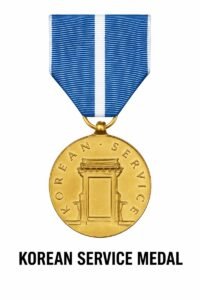
Today, the Korean Service Medal remains an important part of military history and is highly valued by veterans, families, and collectors.
History of the Korean Service Medal
President Harry S. Truman established the Korean Service Medal by Executive Order 10179 on November 8, 1950. It replaced the earlier Navy and Marine Corps Korean Service recognition with a single campaign medal available to all branches of the U.S. Armed Forces.
The medal commemorates service during the Korean War, often referred to as the “Forgotten War,” which lasted from 1950 until the armistice agreement in 1953. Although active fighting largely ceased after the armistice, eligibility for the medal continued through July 27, 1954.
Korean Service Medal Eligibility
The Korean Service Medal may be awarded to members of the:
- U.S. Army
- U.S. Navy
- U.S. Marine Corps
- U.S. Air Force
- U.S. Coast Guard (when operating with the Armed Forces)
To qualify, a service member generally must have:
- Served in the Korean theater of operations.
- Served between June 27, 1950, and July 27, 1954.
- Participated in combat operations or qualifying military duties within the designated area.
Personnel serving aboard ships, aircraft, or in direct support of military operations may also qualify under specific eligibility rules.
Korean Service Medal Design
The Korean Service Medal is made of bronze.
Obverse:
- A soldier advancing beneath a spray of Korean symbols.
- Symbolizes the courage and determination of U.S. forces during the Korean War.
Reverse:
- The American bald eagle.
- The inscription “Korean Service.”
- Laurel branches representing honor and victory.
The ribbon features:
- Light blue
- White
- Yellow
- Red
These colors represent the United Nations Command and the Korean theater of operations.
Campaign Stars
The Korean Service Medal is authorized to be worn with bronze or silver service stars.
- Bronze Service Star: Represents participation in one designated campaign.
- Silver Service Star: Worn in place of five bronze service stars.
A total of 13 official campaigns were designated during the Korean War.
United Nations Service Medal
Most recipients of the Korean Service Medal also qualified for the United Nations Service Medal, which recognized multinational participation in the defense of South Korea.
Eligible veterans were often authorized to wear both medals.
National Defense Service Medal
Many Korean War veterans also received the National Defense Service Medal, although the two awards recognize different forms of service.
- Korean Service Medal: Service in the Korean theater.
- National Defense Service Medal: Honorable active service during designated national emergency periods.
Korean Service Medal vs. Korea Defense Service Medal
These two medals are frequently confused but recognize different periods of service.
| Korean Service Medal | Korea Defense Service Medal |
|---|---|
| Korean War service | Post-war defense of South Korea |
| June 27, 1950 – July 27, 1954 | July 28, 1954 – Present |
| Campaign medal | Service medal |
The Korea Defense Service Medal recognizes continued military service supporting the defense of the Republic of Korea after the Korean War.
Order of Precedence
The Korean Service Medal is worn according to the official U.S. military order of precedence among campaign and service medals.
When authorized campaign stars are earned, they are centered on the suspension ribbon and service ribbon.
Collecting the Korean Service Medal
Original Korean Service Medals remain popular among military collectors. Factors affecting value include:
- Original government-issued medals
- Named or documented examples
- Complete presentation sets
- Original ribbon and suspension hardware
- Condition
Collectors should verify authenticity before purchasing vintage examples.
Frequently Asked Questions
Who qualifies for the Korean Service Medal?
Members of the U.S. Armed Forces who served in the Korean theater between June 27, 1950, and July 27, 1954, and met eligibility requirements.
What do service stars represent?
Bronze service stars indicate participation in individual campaigns, while one silver service star replaces five bronze service stars.
Is the Korean Service Medal still awarded?
No. It is only awarded for qualifying Korean War service performed during the authorized eligibility period.
Can someone receive both the Korean Service Medal and Korea Defense Service Medal?
Yes. Veterans who served during the Korean War and later served in South Korea during the eligibility period for the Korea Defense Service Medal may qualify for both awards.