
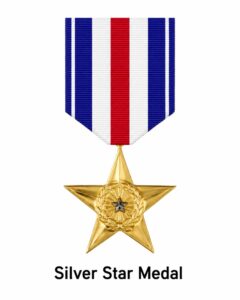
The Silver Star Medal is one of the most respected military decorations awarded by the United States Armed Forces. It recognizes extraordinary acts of heroism performed during combat against an enemy. As the nation’s third-highest decoration for valor in combat, the Silver Star represents exceptional courage, selfless service, and unwavering dedication under the most dangerous conditions.
Members of every branch of the U.S. military—including the Army, Navy, Marine Corps, Air Force, Coast Guard, and Space Force—may receive the Silver Star when their actions demonstrate remarkable bravery that rises above the expectations of military duty.
What Is the Silver Star Medal?
The Silver Star Medal honors service members who distinguish themselves through gallantry in action against an enemy of the United States. The award recognizes courage demonstrated during combat operations when an individual’s actions significantly contribute to mission success while placing themselves in great personal danger.
Unlike medals awarded for long-term service or achievement, the Silver Star specifically recognizes heroism during combat. It acknowledges actions that involve considerable risk and exceptional bravery but do not meet the criteria for the Medal of Honor or the Distinguished Service Cross, Navy Cross, or Air Force Cross.
Receiving the Silver Star is a testament to extraordinary leadership, courage, and commitment under fire.
History of the Silver Star
The origins of the Silver Star date back to World War I. In 1918, the U.S. Army introduced the Citation Star, a small silver star worn on campaign ribbons to recognize acts of gallantry.
In 1932, the Citation Star evolved into the Silver Star Medal, becoming a full military decoration. This change elevated the recognition given to brave service members while preserving the legacy of those who had previously earned the Citation Star.
Since its creation, the Silver Star has been awarded during nearly every major U.S. military conflict, including:
- World War II
- Korean War
- Vietnam War
- Gulf War
- Iraq War
- War in Afghanistan
- Other combat operations around the world
Thousands of courageous men and women have received the Silver Star for actions ranging from rescuing wounded comrades to leading successful attacks under intense enemy fire.
Who Can Receive the Silver Star?
The Silver Star may be awarded to members of any branch of the U.S. Armed Forces.
Eligible recipients include:
- Army
- Navy
- Marine Corps
- Air Force
- Coast Guard
- Space Force
The award may also be presented to qualified members of allied foreign military forces serving alongside U.S. forces when authorized by U.S. military regulations.
The rank of the recipient does not determine eligibility. Enlisted personnel, noncommissioned officers, warrant officers, and commissioned officers have all earned the Silver Star through acts of heroism.
Eligibility Requirements
To qualify for the Silver Star Medal, a service member must perform an act of gallantry while engaged in military operations involving conflict with an opposing force.
Typical qualifying actions include:
- Leading troops despite intense enemy fire
- Rescuing wounded personnel during combat
- Defending fellow service members under direct attack
- Continuing to fight despite serious injuries
- Taking decisive action that changes the outcome of a battle
The heroic act must be witnessed, documented, and thoroughly reviewed through the military chain of command before approval.
Because of the rigorous review process, the Silver Star remains one of the military’s most respected decorations.
What Does the Medal Look Like?
The Silver Star Medal features a bronze five-pointed star with a smaller silver star at its center, symbolizing gallantry and distinguished courage.
The reverse includes space for engraving the recipient’s name.
Its ribbon consists primarily of deep blue with white and red stripes, reflecting the colors of the American flag and representing patriotism, honor, and sacrifice.
The medal’s clean yet powerful design has remained largely unchanged for decades, making it one of the most recognizable military decorations.
How the Silver Star Is Awarded
Awarding the Silver Star involves an extensive review process designed to ensure that every recipient has truly demonstrated exceptional heroism.
The process generally includes:
- Recommendation by commanders or witnesses
- Collection of eyewitness statements
- Review of official operational reports
- Verification of combat actions
- Approval through multiple command levels
- Final authorization by the appropriate military authority
Because of these stringent standards, not every recommendation receives approval.
The award ceremony often takes place before fellow service members, family members, and military leadership, highlighting the importance of the recipient’s bravery.
Notable Silver Star Recipients
Throughout American military history, thousands of brave service members have earned the Silver Star.
Recipients have included:
- Infantry soldiers
- Combat pilots
- Navy corpsmen
- Marines
- Special Operations personnel
- Combat medics
- Aircrew members
- Coast Guardsmen supporting combat missions
Many recipients displayed extraordinary courage by risking their own lives to save others, continuing to fight after being wounded, or leading successful missions under overwhelming enemy fire.
Although many recipients later became well-known military leaders, countless others quietly returned to civilian life after serving their country with distinction.
Each Silver Star represents a unique story of courage and sacrifice.
Why the Silver Star Matters
The Silver Star Medal symbolizes more than individual bravery—it reflects the values that define military service: courage, honor, loyalty, and selfless sacrifice.
For recipients, the medal serves as lasting recognition of extraordinary actions performed under the most challenging circumstances.
For families, it represents a legacy of service that can be passed from one generation to the next.
For historians and collectors, the Silver Star offers insight into the remarkable stories of those who served in America’s conflicts.
The medal also inspires future generations of service members by demonstrating the highest standards of leadership and personal courage in combat.
Conclusion
The Silver Star Medal remains one of the United States military’s highest honors for valor in combat. Awarded only after careful review, it recognizes service members who willingly placed themselves in harm’s way to protect others and accomplish critical missions.
From its origins following World War I to its continued presentation in modern conflicts, the Silver Star has become a lasting symbol of bravery, dedication, and honor. Every medal awarded tells a story of extraordinary heroism and reminds us of the sacrifices made by the men and women who serve the nation with courage and distinction.
Explore More Military Awards
If you’d like to learn more about military medals, decorations, ribbons, badges, unit awards, and award eligibility, visit our Military Awards and Decorations: The Complete Guide, which serves as the central resource for all military awards topics.