Military service often extends beyond national borders. In today’s interconnected world, U.S. military personnel frequently work alongside allied nations, coalition forces, and international organizations to support peacekeeping missions, combat operations, humanitarian efforts, and global security initiatives.
As a result, some service members become eligible for foreign decorations and joint service medals. These awards recognize contributions made during multinational operations and reflect the cooperation that exists between military forces around the world.
While many people are familiar with U.S. military medals and decorations, foreign awards and joint service medals often generate questions because they follow unique rules and procedures. Understanding these honors provides valuable insight into international military partnerships and the diverse experiences of military personnel.
What Are Foreign Decorations?
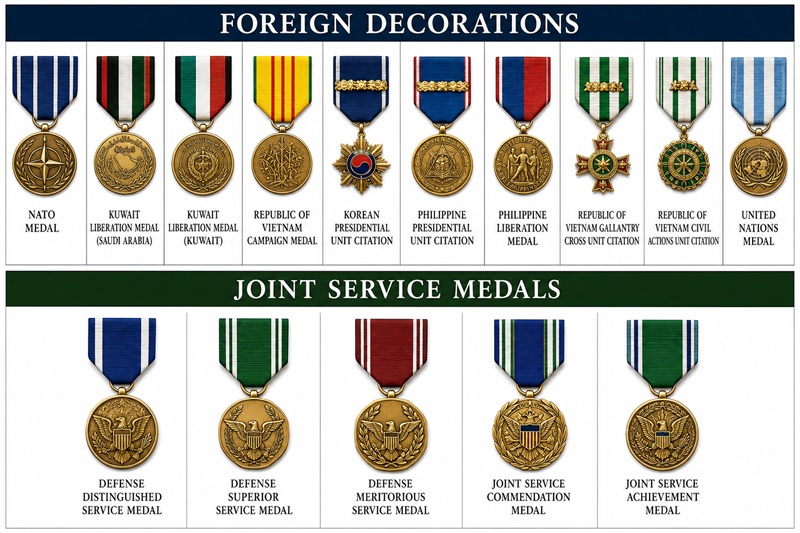
Foreign decorations are military awards presented by allied governments or international organizations to U.S. service members.
These awards are typically granted in recognition of outstanding service, exceptional performance, leadership, or participation in multinational military operations. Foreign governments may award decorations to U.S. military personnel who have contributed significantly to joint missions or supported the interests of allied nations.
Foreign decorations can come from many countries around the world and often feature unique designs, ribbons, and symbols that reflect the traditions and history of the awarding nation.
Receiving a foreign military decoration is considered a significant honor because it represents recognition from another country’s military or government.
Why Foreign Decorations Are Awarded
Foreign decorations are commonly awarded during operations that involve close cooperation between military forces from multiple nations.
Examples include:
- Coalition combat operations
- United Nations peacekeeping missions
- NATO operations
- Humanitarian assistance missions
- Disaster relief efforts
- Military training exchanges
- International security partnerships
When U.S. service members make meaningful contributions to these missions, allied governments may choose to recognize their efforts through military decorations and honors.
These awards strengthen international relationships and acknowledge the teamwork required to achieve shared military objectives.
What Are Joint Service Medals?
Joint service medals are U.S. military awards presented to personnel serving in joint organizations composed of members from multiple military branches.
Unlike branch-specific awards, joint service medals recognize achievements accomplished while serving in unified commands, defense agencies, combatant commands, or other joint military organizations.
Joint service awards highlight the increasing importance of cooperation among the Army, Navy, Air Force, Marine Corps, Space Force, and Coast Guard.
As military operations become more integrated, joint service medals have become an important part of the military awards system.
Common Joint Service Awards
Several military decorations specifically recognize service within joint organizations.
These awards may honor:
- Outstanding achievement
- Meritorious service
- Exceptional leadership
- Operational excellence
- Significant contributions to joint missions
Joint service medals help ensure that military personnel receive appropriate recognition regardless of their branch affiliation while serving in combined military environments.
They also reinforce the importance of teamwork across the entire Department of Defense.
United Nations and International Mission Medals
Many service members become eligible for special medals through participation in United Nations or multinational operations.
United Nations medals are often awarded to military personnel who support peacekeeping missions, humanitarian operations, or international security efforts. These medals recognize service performed under the authority of the United Nations and symbolize cooperation among participating nations.
Similarly, NATO and coalition operation medals may be awarded to personnel who contribute to multinational defense and security missions.
These decorations represent the global nature of modern military service and the partnerships required to address international challenges.
Approval Requirements for Foreign Awards
Unlike most U.S. military decorations, foreign awards often require additional approval before they can be officially accepted and worn.
When a foreign government offers a decoration to a U.S. service member, military authorities review the award to ensure it complies with applicable laws, regulations, and diplomatic guidelines.
Approval procedures may vary depending on:
- The awarding nation
- The type of decoration
- The recipient’s branch of service
- The circumstances surrounding the award
In many cases, service members must obtain official authorization before accepting or wearing foreign decorations on their military uniforms.
These requirements help maintain consistency and ensure compliance with military regulations.
Wearing Foreign Decorations on Military Uniforms
Foreign decorations are generally subject to specific uniform regulations.
Each military branch publishes detailed dress and appearance instructions that explain how authorized foreign awards may be worn. These regulations determine:
- Placement on the uniform
- Order of precedence
- Authorized devices and attachments
- Conditions for wear
- Documentation requirements
Because foreign awards differ from U.S. decorations, special guidance is often necessary to ensure proper display.
Service members who receive foreign decorations must follow these regulations carefully to remain in compliance with military standards.
Why Documentation Matters
Foreign decorations and joint service medals often involve additional paperwork compared to many standard military awards.
Official documentation may include:
- Award certificates
- Authorization memorandums
- Approval letters
- Personnel record updates
- Orders authorizing acceptance and wear
Proper documentation ensures that awards are officially recognized and accurately recorded within military personnel systems.
Maintaining these records is important for preserving military history and ensuring that achievements are properly documented throughout a service member’s career.
The Significance of International Military Recognition
Foreign decorations and joint service medals symbolize more than personal achievement. They also represent cooperation, diplomacy, and partnership among military forces from different nations.
These awards recognize individuals who contribute to missions that promote international stability, humanitarian assistance, collective defense, and global security.
For recipients, foreign decorations often serve as reminders of unique assignments, overseas deployments, and experiences working alongside military personnel from around the world.
They also highlight the increasingly international nature of modern military operations.
Conclusion
Foreign decorations and joint service medals play an important role in recognizing service members who contribute to multinational operations, peacekeeping missions, humanitarian efforts, and joint military organizations. These awards reflect the teamwork, professionalism, and cooperation required to support global security objectives.
Although foreign awards often require additional approval, documentation, and compliance with dress regulations, they remain highly respected honors that recognize outstanding contributions on the international stage. Together, foreign decorations and joint service medals tell an important story about military service beyond national borders and the partnerships that strengthen defense around the world.
Explore More Military Awards
If you’d like to learn more about military medals, decorations, ribbons, badges, unit awards, and award eligibility, visit our Military Awards and Decorations: The Complete Guide, which serves as the central resource for all military awards topics.