
GWOT-SM
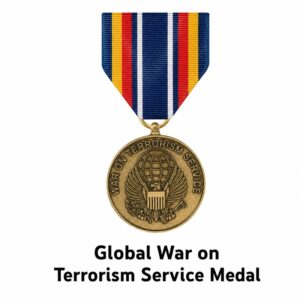
The Global War on Terrorism Service Medal (GWOT-SM) recognizes U.S. military personnel who supported the Global War on Terrorism through service on active duty. Unlike campaign medals awarded for deployment to combat zones, this medal honors those who contributed to the overall mission from locations around the world, including within the United States.
Established after the terrorist attacks of September 11, 2001, the medal acknowledges the dedication of service members whose work directly supported military operations against terrorism. Millions of service members across every branch of the U.S. Armed Forces have earned this award.
What Is the Global War on Terrorism Service Medal?
The Global War on Terrorism Service Medal was created by Executive Order 13289 on March 12, 2003. It recognizes military personnel who served in support of operations combating terrorism after September 11, 2001.
Unlike medals awarded for deployment to Iraq, Afghanistan, or other combat areas, this medal honors service members who supported anti-terrorism operations while serving on active duty, regardless of whether they deployed overseas.
The award reflects the enormous military effort required to defend the United States and support worldwide counterterrorism operations.
History of the Medal
Following the attacks on September 11, 2001, the United States launched military operations worldwide to combat terrorism.
As thousands of military members supported homeland defense, intelligence gathering, logistics, training, medical missions, transportation, communications, and force protection, the Department of Defense recognized that many deserving service members would not qualify for combat campaign medals despite their significant contributions.
To acknowledge their service, the Global War on Terrorism Service Medal was established in 2003.
Today it remains one of the most widely awarded military service medals.
Eligibility Requirements
To qualify, a service member generally must have:
- Served on active duty after September 11, 2001
- Completed at least 30 consecutive days or 60 non-consecutive days of active service
- Supported approved Global War on Terrorism operations
- Served honorably
Eligibility requirements have changed slightly over time as Department of Defense policies evolved, but these remain the general standards.
Who Can Receive the Medal?
The medal may be awarded to members of:
- U.S. Army
- U.S. Marine Corps
- U.S. Navy
- U.S. Air Force
- U.S. Space Force
- U.S. Coast Guard (when operating under Department of Defense authority)
Both Active Duty and many Reserve or National Guard personnel serving qualifying active-duty periods may be eligible.
Qualifying Service
Examples of qualifying service include:
- Homeland defense operations
- Force protection missions
- Intelligence support
- Communications support
- Logistics operations
- Medical support
- Transportation operations
- Training missions
- Administrative support for counterterrorism operations
Many service members earned this medal without deploying overseas because their work directly supported Global War on Terrorism operations.
Medal and Ribbon Design
The medal is bronze and features an eagle beneath a globe, symbolizing America’s worldwide efforts against terrorism.
Ribbon Colors
The ribbon includes:
- Blue
- White
- Red
- Gold
These colors symbolize vigilance, sacrifice, courage, and national service while reflecting the global nature of counterterrorism missions.
Difference Between the Global War on Terrorism Service Medal and Expeditionary Medal
These two medals are frequently confused.
Global War on Terrorism Service Medal
Awarded for:
- Supporting Global War on Terrorism operations
- Usually while serving at home stations or other qualifying locations
- Does not require deployment to a designated combat area
Global War on Terrorism Expeditionary Medal
Awarded for:
- Deployment to approved overseas operations
- Service within designated expeditionary areas
- Meeting time or mission requirements in a combat theater
Some service members qualified for both medals, depending on their assignments.
Order of Precedence
The Global War on Terrorism Service Medal is worn according to the official U.S. military awards order of precedence.
It is generally worn after the Global War on Terrorism Expeditionary Medal and before later campaign medals, although placement varies slightly between military branches according to official regulations.
How to Replace a Lost Medal
Veterans can request replacement medals through their branch of military service.
Typically required documents include:
- DD Form 214
- Service information
- Proof of identity
Family members may also request replacement medals for deceased veterans when eligible.
Why the Medal Is Important
Although it is not considered a combat decoration, the Global War on Terrorism Service Medal represents an important period in modern military history.
Millions of service members contributed to national defense through intelligence, logistics, security, planning, communications, transportation, and countless support roles that made military operations possible.
The medal recognizes that every mission depends on teamwork, not just those serving in combat zones.
Frequently Asked Questions
Can I receive both the GWOT Service Medal and Expeditionary Medal?
Yes. If you meet the eligibility requirements for each award, you may receive both medals.
Does everyone who served after 9/11 receive this medal?
No. Service members must meet qualifying active-duty requirements and support approved Global War on Terrorism operations.
Is this considered a combat medal?
No. It is a service medal recognizing support for Global War on Terrorism operations rather than direct combat participation.
Can National Guard members receive it?
Yes. National Guard personnel serving qualifying active-duty orders may be eligible.
Is the medal still awarded?
Yes. Eligibility depends on current Department of Defense policies and qualifying service.
Conclusion
The Global War on Terrorism Service Medal honors the dedication of the men and women who supported America’s response to terrorism after September 11, 2001. Whether serving in logistics, intelligence, homeland defense, communications, medical support, or administration, recipients played an essential role in one of the largest sustained military efforts in modern history. The medal serves as lasting recognition that success in military operations depends on the commitment and professionalism of every service member.